Sensory Overload in Dementia: Why the World Feels Overwhelming
As a caregiver, you’ve likely experienced moments when your loved one becomes suddenly agitated, withdrawn, or distressed without a clear reason. You’ve gone through the checklist—are they hungry, tired, or in pain?—but nothing seems to help. Sometimes, the cause isn’t something obvious but rather an invisible force: sensory overload.
For a person living with dementia, the world can feel like a constant barrage of sights, sounds, and sensations. What might seem like normal background noise to us can be an overwhelming storm for them. Understanding sensory overload in dementia isn’t just about managing challenging behaviors; it’s about seeing the world through their eyes and learning how to create a space of calm and safety.
Navigating the complexities of dementia care is a journey filled with love, patience, and a lot of learning. At Bella Groves, we walk alongside families in the San Antonio area, offering support and practical guidance. We know this path is hard, but you don’t have to walk it alone.
What is Sensory Overload?
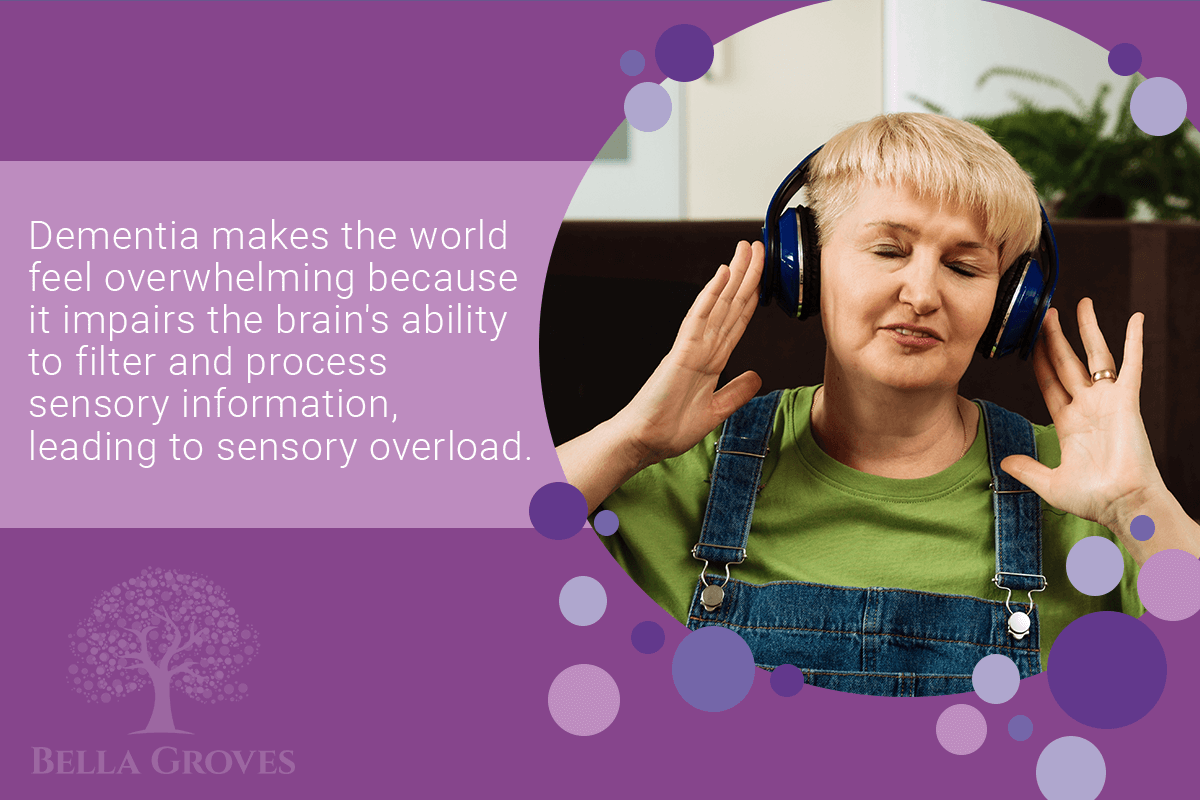
Dementia changes how the brain processes information. The parts of the brain that filter out irrelevant stimuli—like the hum of a refrigerator, the flicker of a television, or overlapping conversations—don’t work as effectively. As a result, the brain becomes overwhelmed, unable to make sense of the incoming flood of sensory data.
This isn’t just about loud noises or bright lights. Sensory overload can be triggered by many things that are part of everyday life.
Common triggers include:
- Auditory: Loud or sudden noises, multiple conversations at once, a blaring TV, or even background music.
- Visual: Cluttered rooms, bright or flickering lights, busy patterns on floors or walls, or fast-moving crowds.
- Tactile: Uncomfortable clothing fabrics, the unexpected touch of a stranger, or extreme temperatures.
- Olfactory: Strong perfumes, cleaning products, or cooking smells.
- Social: Large gatherings, meeting new people, or being in a busy public space like a grocery store.
Environments with too much going on are prime spots for sensory overload. A family party, a bustling café, or even a trip to the mall can quickly become distressing for someone with dementia because their brain simply can’t keep up.
How to Spot the Signs
Recognizing sensory overload in dementia is the first step toward helping your loved one. The signs can vary, but they often manifest as sudden changes in behavior. Think of it as their brain’s emergency signal that things have become too much to handle.
Watch for these common signs:
- Increased agitation, restlessness, or pacing
- Anxiety, fearfulness, or crying
- Withdrawing from conversation or activity
- Covering ears or eyes
- Becoming irritable or aggressive
- Difficulty communicating or following directions
- Attempting to leave the environment
Pay attention to when these behaviors occur. Does your loved one become agitated every time the grandkids visit? Or do they seem most stressed during mealtimes in a noisy dining hall? Keeping a simple log can help you identify patterns and specific triggers. This information is invaluable for creating a more supportive environment.
Practical Ways to Reduce Sensory Overload
Creating a dementia-friendly environment doesn’t require a complete home makeover, whether in your own home or in memory care facilities. Small, thoughtful adjustments can make a world of difference. The goal is to reduce unnecessary stimulation and create a predictable, calming atmosphere.
Create a Sensory-Friendly Space
- Declutter: Keep rooms tidy and organized to minimize visual noise.
- Soften the Lighting: Use lamps with warm, soft light instead of harsh overhead fluorescent lights. Close blinds to reduce glare.
- Reduce Noise: Turn off the TV when no one is watching it. Play calming, instrumental music at a low volume. Use sound-absorbing materials like rugs and curtains.
Adapt Daily Routines
- Establish Predictability: Stick to a consistent daily schedule for meals, activities, and sleep. Familiarity is comforting.
- Plan Outings Carefully: Schedule trips during off-peak hours when places are less crowded. Opt for smaller, quieter settings.
- Allow for Quiet Time: Build moments of peace into the day where your loved one can rest in a quiet space without any demands.
Use Personalized Approaches
- Know Their Preferences: Does your mom love classical music? Does your dad find the scent of lavender calming? Use their favorite things to create a soothing atmosphere.
- Engage One Sense at a Time: Instead of a busy activity, try a simple, focused one like sorting laundry, looking through a photo album, or listening to familiar music with headphones.
Our Commitment to You
At Bella Groves, we believe that love is greater than dementia. Our approach to care is rooted in this belief. We go above and beyond what typical memory care facilities provide, and our community in the Bulverde area is designed to be calm, nurturing spaces that reduce sensory triggers. We are a community founded by local families, and we see our purpose as more than just “taking care” of people; we are here to create a community of unconditional joy.
You Are Not Alone on This Journey
Understanding and managing sensory overload is a powerful way to show your love. It requires empathy, observation, and a willingness to adapt. But these efforts can drastically improve your loved one’s quality of life and bring more moments of peace and connection for both of you.
If you’re feeling overwhelmed, please know that you don’t have to figure it all out by yourself. Bella Groves is here to support families in San Antonio and the surrounding areas with resources, education, and compassionate care. Contact us today to learn how we can be a part of your story.
Key Takeaways
- Sensory overload happens when someone with dementia becomes overwhelmed by sights, sounds, and other sensations because their brain can no longer filter out extra information.
- Common triggers include loud noises, cluttered spaces, busy patterns, and large crowds.
- Signs of sensory overload include sudden agitation, anxiety, withdrawal, or restlessness.
- Care partners can help by creating a calm, decluttered environment, sticking to a predictable routine, and planning outings for quieter times.
- Making small, thoughtful adjustments can significantly improve your loved one’s quality of life and create more moments of peace.

Dementia and Immune System Connection: What’s the Link?