Finding Connection: Communication Tips for Dementia Caregivers
Dementia changes everything. It changes brains, daily routines, and family dynamics. But perhaps the most heartbreaking change is the silence that can slowly creep into a home. One of the hardest parts for families here in Bulverde and San Antonio is watching that easy, effortless back-and-forth conversation start to fade.
It’s important to remember that dementia isn’t a single disease; it’s a shift in how a person interacts with the world. It affects memory, language, and social abilities. At Bella Groves, we know that while the words might get lost, the person inside remains. We believe in a simple truth: Love is Greater than Dementia. Our goal isn’t just to “manage” a condition, but to foster unconditional joy in the lives we touch.
If you are having trouble connecting with a parent, spouse, or friend, you aren’t alone. Learning new ways to speak—and listen—can make all the difference.
Understanding the Silence
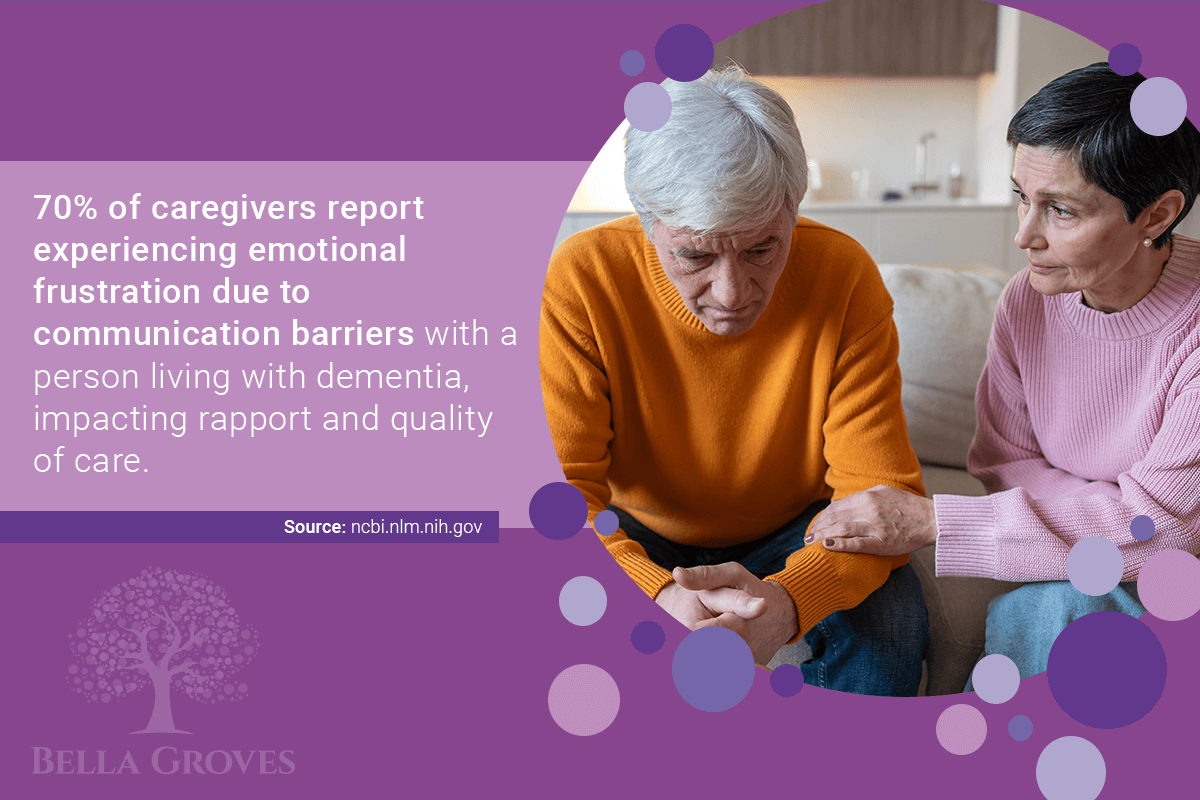
When the brain changes, finding the right word can feel like trying to catch smoke with your bare hands. It is frustrating for them, and often painful for you. You might notice your mom withdrawing at family gatherings because she can’t keep up with the fast-paced chatter, or your husband getting angry because he can’t explain what he wants for lunch.
This isn’t them trying to be difficult. It’s the disease building a wall. Recognizing this emotional impact is the first step toward tearing down that wall, brick by brick.
Creating a Safe Space
Before you say a word, look around the room. Is the TV blaring the news? Is the dishwasher running? Are the grandkids running around? Background noise and chaos are major barriers to connection.
To help your loved one focus, create a calm environment. Turn down the volume and minimize distractions. Approach them from the front so you don’t startle them, and get on their level. If they are sitting, pull up a chair. Maintaining soft eye contact signals safety and lets them know, “I am here, and I am listening.”
Practical Communication Tips for Dementia Caregivers
Once you have their attention, how do you keep the conversation flowing? It requires a shift in style. Here are some practical communication tips for dementia caregivers to help bridge the gap.
First, slow down. We naturally tend to rush through sentences, but a person with dementia needs extra time to process what you’re saying. Speak clearly and use simple words, but keep your tone adult and respectful—avoid “baby talk.”
Ask one question at a time. Instead of asking, “What do you want for breakfast?” which requires them to search their entire memory bank of foods, try offering a choice: “Would you like toast or eggs?” Giving options is much less stressful than open-ended questions.
And remember: silence is okay. If they don’t answer right away, wait. Give them space to think. If you need to repeat yourself, say it exactly the same way you did the first time, so they don’t have to process a whole new set of words.
The Power of Touch and Gesture
Words are only half the story. When speech fails, non-verbal cues step in. If you are asking if they want coffee, point to the pot. If you are saying goodbye, wave.
Never underestimate the power of touch. A gentle hand on the shoulder or holding their hand can convey reassurance and love that a paragraph of explanation never could. Pay attention to their body language, too. Are they tense? Are they smiling? They may be telling you how they feel without uttering a syllable.
Meeting Them Where They Are
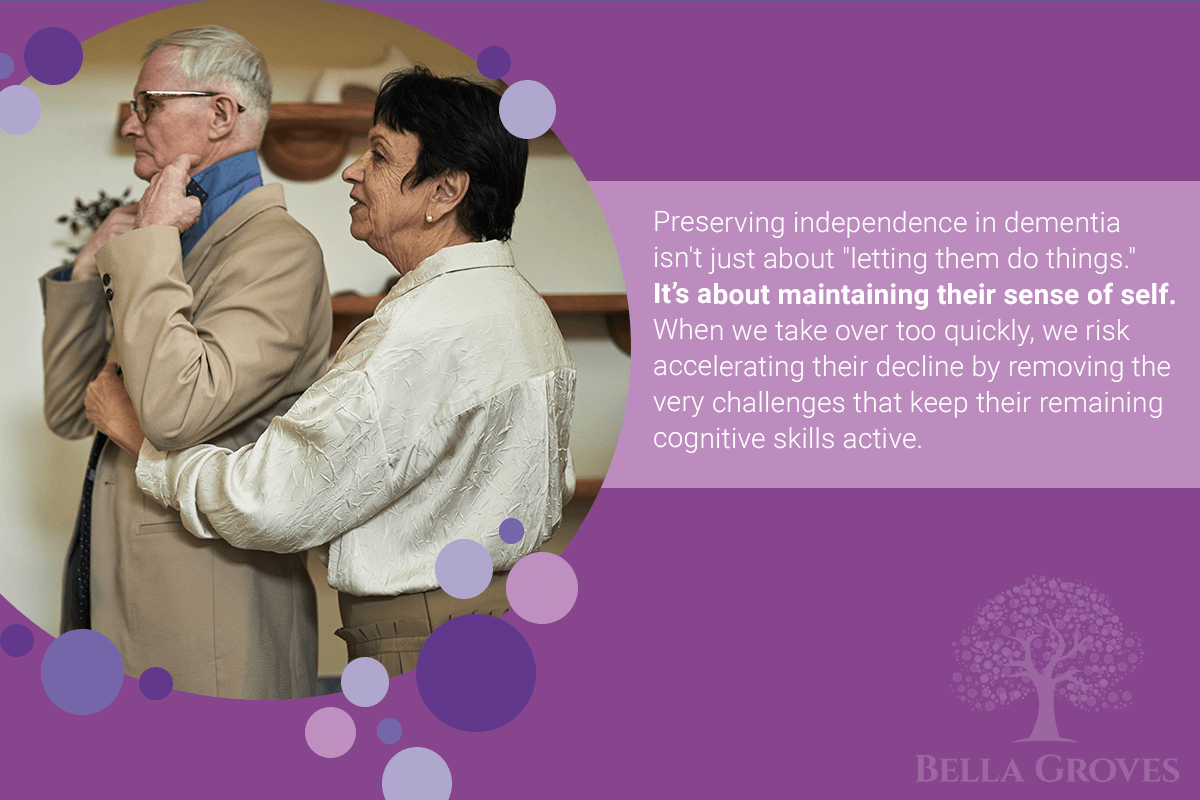
You know your loved one better than anyone. Use that history. If your dad was a mechanic, use analogies about cars to explain things. If your wife loved gardening, talk about the seasons or the flowers outside. Tailor your conversations to their life story and their current abilities.
This is about connecting with who they are right now. At Bella Groves, we often say that we have a higher calling than just “taking care” of people. We want to be part of their story, honoring their past while celebrating their present.
Navigating the Tough Moments
Even with the best intentions, things go wrong. You might encounter resistance, anger, or confusion. Here are some communication tips for dementia caregivers, specifically for those challenging situations.
If they ask the same question ten times, answer it the tenth time with the same kindness and patience as the first. It’s not a test of your patience; it’s a glitch in their memory.
If they say something factually wrong—like claiming they need to go to work when they retired twenty years ago—don’t argue. Logic rarely wins against dementia. Instead, step into their reality. Validate the feeling behind the words. You might say, “You were such a hard worker. Tell me about your favorite project.” This defuses the anxiety without forcing them to confront a reality that feels wrong to them.
The Magic of Remembering
Sometimes the present is foggy, but the past is crystal clear. Reminiscence therapy is just a fancy way of saying “remembering together.”
Use props to spark joy. Put on their favorite record from high school. Look through an old wedding album. Let them touch the fabric of a quilt they made. These sensory cues can unlock stories and smiles that seemed lost forever. It’s not about accuracy; it’s about the feeling of sharing a memory.
You Don’t Have to Walk Alone
You cannot pour from an empty cup. Caring for someone with dementia is rewarding, but it is also exhausting.
Seek out support. Whether it’s a local support group here in Central Texas, educational resources, or just a friend who listens, you need a team. Bella Groves was founded by local families who felt called to serve our neighbors. We are here to walk alongside you, offering education and support so you don’t have to navigate this journey in the dark.
Unconditional Joy is Possible
Dementia changes people’s brains; it’s time to change our hearts. By using these communication tips for dementia caregivers, you aren’t just exchanging information; you are validating their humanity. You are creating moments of connection in a world that often feels disconnected.
We’re ready to be a part of your story. If you need guidance, resources, or just a compassionate ear, contact Bella Groves today. Together, we can create a community of unconditional joy.