Balancing Independence in Dementia Care: Finding the Right Equilibrium
Watching someone you love navigate the changes of dementia is incredibly hard. There’s a constant tug-of-war in your heart between wanting to keep them safe and wanting to preserve their dignity. You might find yourself hovering while they make coffee, wondering if you should step in, or feeling guilty for taking over a task you know they used to love. It’s a delicate dance, and frankly, there’s no perfect rule book for it.
Balancing independence in dementia care is one of the most common challenges care partners face. You want to empower them, but you also need to protect them. It’s a moving target, shifting day by day—sometimes even hour by hour. At Bella Groves, we see this dilemma every day in the families we serve around San Antonio. We know that dementia changes people’s brains, but it shouldn’t strip them of their humanity. We’re here to help you navigate these gray areas with compassion and practicality.
Understanding the Shift
Dementia isn’t just about memory loss; it affects how a person processes the world, solves problems, and handles physical tasks. But here is the important part: it doesn’t take away everything all at once. A person might lose the ability to drive safely but still be perfectly capable of choosing their outfit or setting the table.
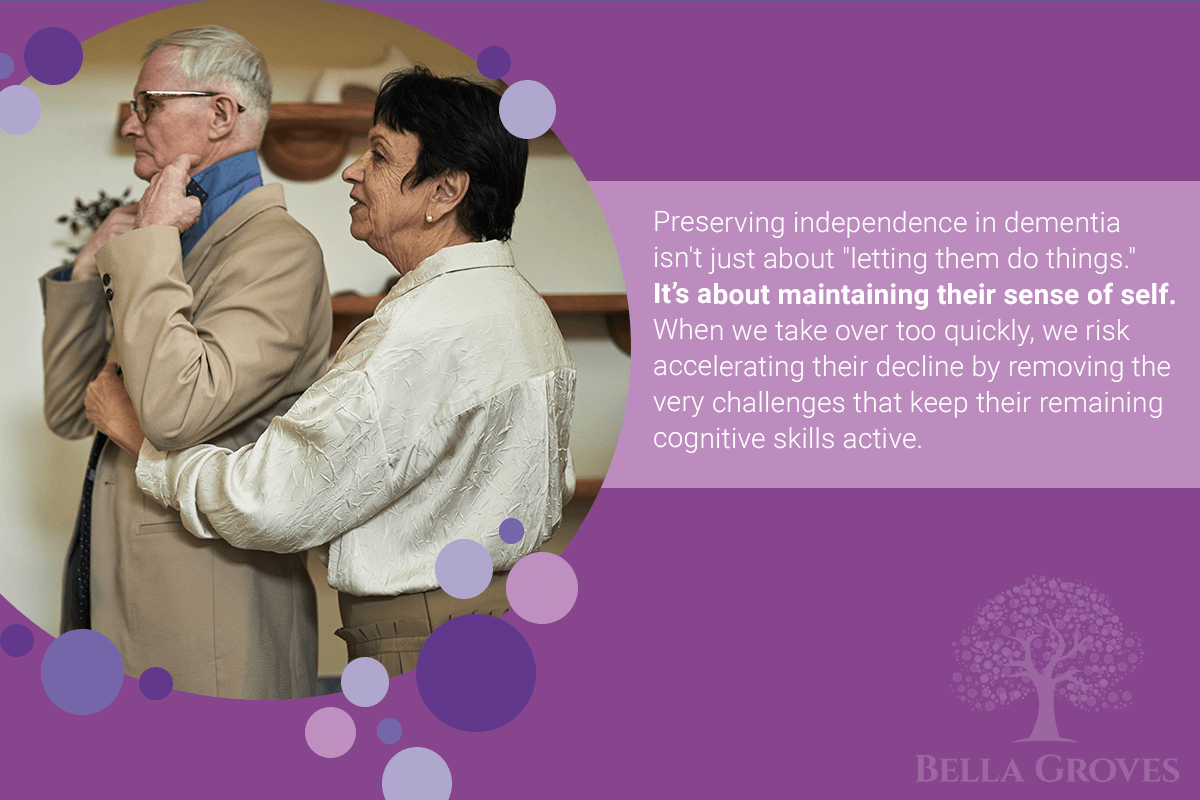
Preserving independence isn’t just about “letting them do things.” It’s about maintaining their sense of self. When we take over too quickly, we risk accelerating their decline by removing the very challenges that keep their remaining cognitive skills active. The goal is to find that sweet spot where they feel capable and valued, without being put in harm’s way.
Assessing Capabilities: A Day-by-Day Check-in
So, how do you know what they can still handle? It requires playing detective a little bit. Instead of assuming they can’t do something because they had trouble with it yesterday, observe them in the moment.
Look at specific tasks. Can they button their shirt if you lay it out for them? Can they make a sandwich if the ingredients are already on the counter? Independence doesn’t have to look like doing it all alone. It might mean doing it with support.
Watch for signs of frustration or fatigue. If a task that usually takes five minutes is taking thirty and causing them distress, that might be a sign to step in gently. But if they are happy and safe, even if it’s taking a long time and the result isn’t perfect, let them be. Perfection is not the goal here; participation is.
Strategies for Balancing Independence in Dementia Care
You don’t have to figure this out alone. There are practical ways to set the stage for success, allowing your loved one to do as much as possible for themselves.
Modifying the Environment
Sometimes, the barrier isn’t the person’s ability; it’s the environment. A few simple tweaks can make a huge difference. If they are having trouble finding things, try labeling drawers with pictures or words. Keep commonly used items in plain sight. Good lighting and removing trip hazards, like loose rugs, can help them move freely around their home without you needing to hover constantly.
Simplifying Tasks
Complex tasks can be overwhelming. Instead of saying, “Go get dressed,” which involves finding clothes, undressing, and putting on new ones, try breaking it down. “Here is your shirt. Let’s put this on first.” By offering one step at a time, you reduce the cognitive load, allowing them to succeed at each small stage of the process.
Using Assistive Tools
Technology and simple tools can be dignity-savers. Clocks that clearly spell out the day and time can reduce anxiety. Medication organizers with alarms can help them manage their own health for longer. These tools act as a safety net, allowing them to feel in control while you know the important bases are covered.
Supporting Their Voice and Choice
One of the most profound ways to support independence is by respecting their right to choose. It might seem small, but asking, “Would you like coffee or tea?” rather than just handing them a cup, validates their agency.
Involve them in decisions as much as safely possible. If you’re planning the day, ask for their input. Even as verbal communication becomes difficult, honoring their past preferences—like the music they love or the routine they’ve always kept—shows that you see the person, not just the condition. We believe love is greater than dementia, and part of that love is listening to what they want, even when they can’t say it clearly.
Safety Vs. Autonomy
This is the hardest part. How do you handle safety risks such as wandering and medication management? It’s about managing risk, not eliminating it entirely at the cost of their freedom.
For medication, maybe they can still take the pills themselves if you are the one sorting them into the box. For wandering, a GPS tracker or door chimes might allow them to walk freely in the yard without you fearing they will get lost. It’s about finding the “least restrictive” way to keep them safe. Balancing independence in dementia care means constantly weighing the risk against the benefit to their spirit and joy.
A Note for You, the Care Partner
You cannot pour from an empty cup. Trying to perfectly manage your loved one’s independence can be exhausting. It requires patience to watch someone fidget with a zipper for five minutes when you could do it in five seconds.
Give yourself grace. Set realistic expectations. Some days will be better than others. If you have to step in more today because you are tired or they are having a rough day, that is okay. You are doing your best in a situation that doesn’t come with a manual.
–
There is no single right answer to “how much independence is too much?” It’s a journey of trial, error, and deep love. It requires flexibility and a willingness to adapt as their needs change. But remember, the goal isn’t just safety—it’s joy. It’s helping them feel like a participant in their own life for as long as possible.
At Bella Groves, we are ready to be a part of your story. If you are feeling overwhelmed or just need someone to talk through these challenges with, we are here.
Contact Bella Groves today to learn more about how we can support you and your loved one.