The Role of Humor in Dementia Care
When someone you love is living with dementia, some days feel heavier than others. The person you’ve known for years might seem distant, conversations become challenging, and moments of connection feel increasingly precious. At Bella Groves, we’ve learned something powerful through years of supporting families in San Antonio: laughter can bridge the gaps dementia creates. Humor isn’t just a bonus, but a key tool for turning challenging moments into joyful ones.
You might wonder if it’s okay to laugh when dealing with something as serious as dementia. The answer is yes. Laughter doesn’t diminish the reality of your situation; it adds light to it. At Bella Groves, a leading provider of dementia care in San Antonio, we’ve witnessed firsthand how a simple joke, a funny memory, or even a silly face can bring someone back to themselves, even if only for a moment. It’s a reminder that the person you love is still there, and humor can help reconnect with them.
Understanding Humor and Its Remarkable Benefits
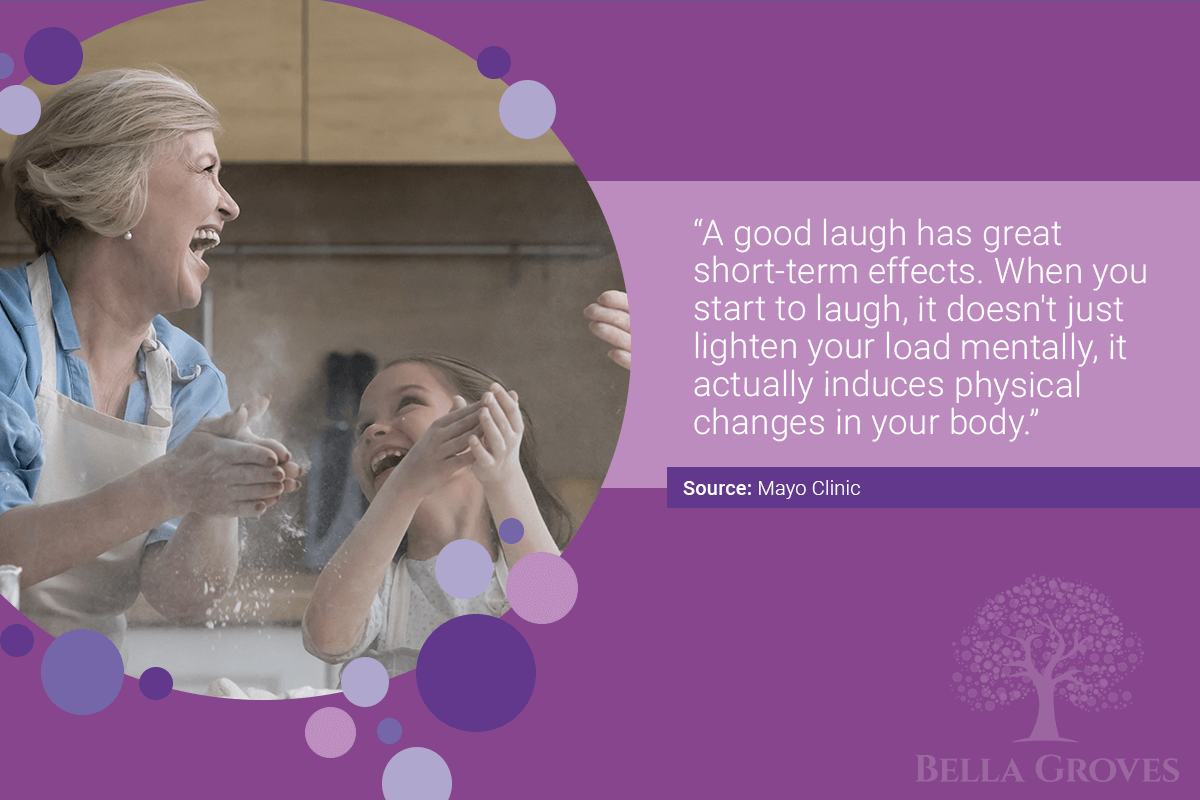
Humor works differently for everyone, but for people living with dementia, it offers unique advantages that go beyond a simple smile. When we laugh, our brains release endorphins—those feel-good chemicals that naturally reduce stress and create a sense of well-being. For someone navigating the confusion and frustration that often accompany dementia, these moments of relief become invaluable.
Laughter also stimulates social connection. Even when words become difficult, a shared chuckle creates an instant bond between care partner and care recipient. It says, “We’re in this together, and we can still find reasons to smile.” This connection is crucial because isolation and depression frequently accompany dementia, making every moment of genuine interaction precious.
From a practical standpoint, humor can defuse tense situations. When someone you love becomes agitated or confused, sometimes a gentle joke or playful comment can redirect their attention more effectively than logical explanations. We’ve seen care partners turn potential breakdowns into moments of connection simply by approaching the situation with lightness instead of stress.
Physical benefits exist, too. Laughter can lower blood pressure, boost immune function, and even provide mild cardiovascular exercise. For individuals with limited physical activity, the benefits of humor in dementia care shouldn’t be underestimated.
Types of Humor That Work Best
Not all humor translates well in dementia care. Sarcasm, complex wordplay, or jokes that require remembering setup lines often fall flat or create confusion. Instead, focus on humor that’s immediate, visual, and heart-centered.
Physical comedy often works wonderfully. Making silly faces, gentle tickling (if welcomed), or exaggerated expressions can elicit genuine laughter. Think of it as returning to childhood humor: simple, direct, and joyful.
Reminiscence humor taps into long-term memories that often remain intact longer than recent ones. Sharing funny stories from their past, looking at old photos that captured silly moments, or reminiscing about humorous family traditions can spark both laughter and meaningful conversation.
Animal humor rarely fails. Whether it’s watching funny pet videos, sharing stories about beloved family pets, or even just making animal sounds together, this type of humor feels safe and universally appealing.
Practical Tips for Incorporating Humor
Start small and follow your loved one’s lead. Pay attention to what naturally makes them smile, and then build on those moments. If they chuckle at a specific type of TV show, make it part of your routine together. If they enjoy it when you sing off-key, embrace your inner comedian.
Timing matters enormously. Don’t force humor when someone is genuinely distressed or experiencing physical discomfort. Instead, look for moments when they seem receptive, such as routine activities like getting dressed or eating meals.
Keep a collection of go-to materials. This might include photo albums with funny family pictures, a playlist of comedic songs from their era, or even a few simple props like silly hats or colorful scarves that can spark playful moments.
Make humor interactive rather than performative. Instead of telling jokes to your loved one, create opportunities to laugh together. This might mean watching a funny movie together, playing simple games, or even just being silly.
Remember that your own genuine laughter is contagious. If you’re having fun, they’re more likely to join in. Don’t worry about being perfect or clever—authenticity trumps sophistication every time.
Navigating Challenges
Sometimes humor doesn’t land the way you expect, and that’s okay. Your family member might not understand a joke that once made them laugh, or they might react differently than anticipated. When this happens, don’t take it personally or feel discouraged. Dementia affects everyone differently, and what works one day might not work the next.
If someone becomes upset by an attempt at humor, quickly shift gears. Offer comfort and reassurance instead. The key is remaining flexible and responsive to their current emotional state.
Some family members worry that humor somehow minimizes the seriousness of dementia or shows disrespect. This couldn’t be further from the truth. Humor acknowledges the full humanity of your family member, including their capacity for joy, connection, and lightness. It’s actually one of the most respectful things you can offer.
Creating Lasting Moments of Joy
Humor in dementia care isn’t about denying the reality of your situation—it’s about finding light within it. Every laugh you share with your loved one becomes a victory against the isolation and fear that dementia can bring. These moments remind both of you that joy remains possible, that connection still exists, and that love truly is greater than any diagnosis.
At Bella Groves, we’ve built our entire approach around creating these moments of unconditional joy.
If you’re seeking dementia care in San Antonio and looking for ways to bring more joy and laughter into daily life, we’re here to support you. Bella Groves offers expert education, resources, and guidance to help families create meaningful connections throughout the dementia journey. Because laughter isn’t just medicine, it’s an act of love. Contact Bella Groves today to discover how our dementia care in San Antonio can help you foster greater joy and connection with your family member. Together, we can ensure that laughter and love shine through even in the face of dementia.

Tackling Medical and Legal Paperwork in Dementia Care Planning